Super Big Slime: Black Hole 3D
- 4.2
- Rating
- 10.00M
- Installs
- Free
- Price

 Analysis by App-foxy
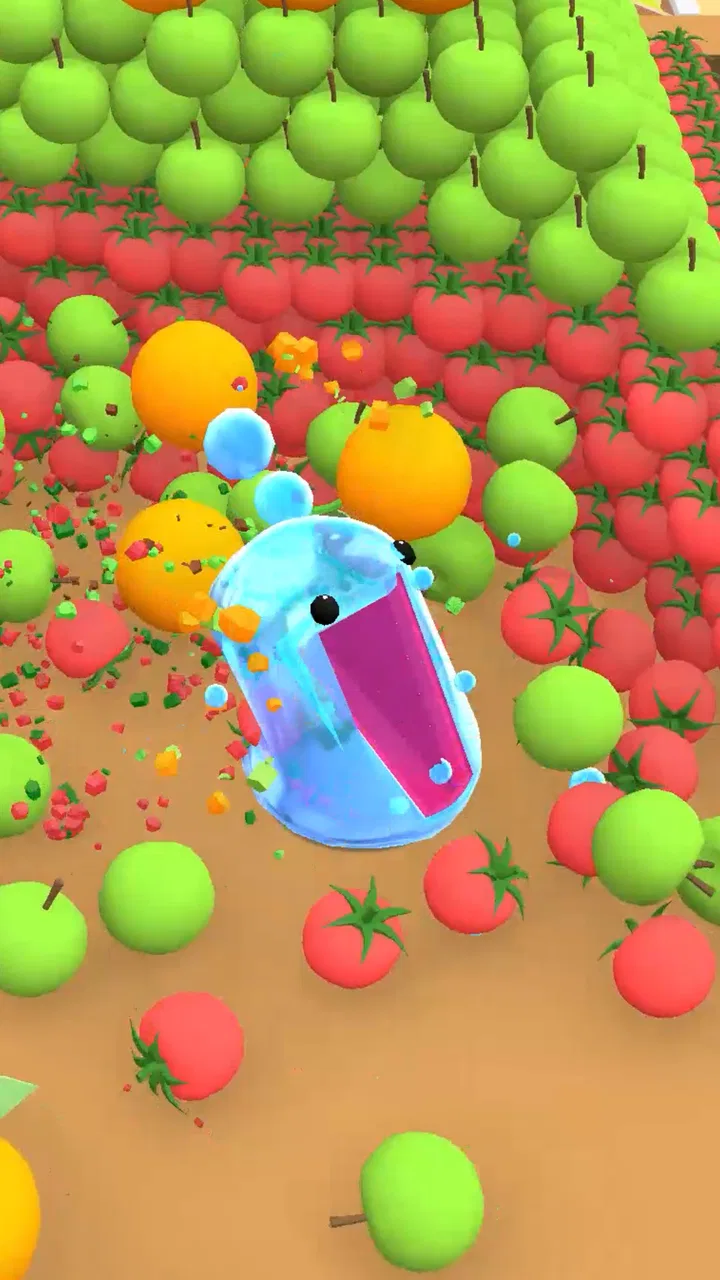
Super Big Slime: Black Hole 3D is a casual game built around one wonderfully simple idea: I control a blackhole-like slime and move around a city, swallowing whatever fits inside me. That basic action is easy to understand within seconds, but the appeal comes from watching a small, hungry blob become increasingly capable of consuming larger parts of the environment.
After spending time with it, I see this as a game for short, low-pressure sessions rather than a deep strategy experience. It is the sort of title I would suggest when you want something immediately playable, visually clear, and uncomplicated. The developer is Supercent, Inc., and the game is free to download, with optional purchases priced from $1.99 to $19.99 per item.
How the swallowing loop feels in everyday play
The opening experience is deliberately straightforward. I guide the slime through a compact urban space, look for objects that are small enough to consume, and use those early bites to build momentum. The pleasure is physical and visual: an object disappears, the slime grows or progresses, and the next target becomes possible.
You May Also Like

 Blood Strike: 2.5 Anniversary
Blood Strike’s Loadouts Turn Every Drop Into a Tactical Gamble
A close look at Blood Strike’s custom loadouts: how fast access to signature weapons reshapes its battle royale rhythm, rewards preparation, and narrows the gap between fights.

 Pandora - Music & Podcasts
Pandora’s Music Is Easy to Start, but Harder to Recover
Pandora’s strength is its low-effort path from a seed to a station. Its weak spot is how much confidence it asks you to place in connection, setup, and quiet recovery.

 8 Ball Pool
 Is Built on Rivalries, Rematches, and Routine
A close look at the rivalries, rematches, shared routines, and unanswered safety questions that turn a quick pool match into a persistent mobile community.

 Samsung Music
’s Quiet Strength Is Playing What You Already Own
Its reach comes less from spectacle than from dependable access to a personal library. That simplicity is both the app’s strongest retention engine and its ceiling.

 AccuWeather: Weather Radar
AccuWeather Review: A Quick, Clear Forecast for Everyday Decisions
For everyday plans, the best forecast is the one you can understand quickly. AccuWeather makes rain timing, radar, and local conditions easy to act on, with a few trade-offs.

 Hill Climb Racing
Why Hill Climb Racing Still Turns Crashes Into One More Run
A tiny car, a bumpy hill and one more upgrade: Hill Climb Racing keeps resurfacing because its simple chaos makes every near-miss feel personal.
More From Our News Desk



That loop works because it gives me a clear answer to the question, “What should I do next?” I do not need to study a complicated map or learn a long list of controls. I simply scan the surroundings, choose a useful target, and keep moving. For a casual game, that clarity matters more than an elaborate tutorial.
A realistic use case is a short break while waiting for an appointment. I can start a session without remembering a complicated storyline, play through a few simple objectives, and put the phone away without feeling that I have abandoned a long campaign. It also suits players who enjoy satisfying destruction but do not want the pressure of a competitive match or a demanding puzzle.
The city setting gives the loop more character than swallowing abstract shapes would. Streets, buildings, and everyday objects make the growth process easy to read. I naturally begin by checking the ground around me, then work toward larger targets once the slime is ready. That creates a small but useful rhythm: explore, consume, grow, and reassess.
Small decisions make the simple idea work
The most useful habit I developed was avoiding random movement. When I rushed around without looking, I often spent time approaching objects that were still too large. A better approach was to sweep one area carefully, collect the easy targets, and then return to the center of the space with a larger slime. This made progress feel more deliberate without turning the game into a serious strategy title.
Another practical tip is to treat the environment as a route rather than a pile of objects. I look for clusters of things that can probably be consumed in sequence. That reduces wasted movement and helps me notice when an apparently difficult target is actually reachable after clearing nearby items. It is a small change, but it makes the game feel smoother.
I also found that the best moments are not always the biggest ones. Clearing several modest objects in quick succession gives the game a pleasant rhythm, while chasing one oversized target too early can interrupt that flow. Players who enjoy gradual progress will probably appreciate this more than people who want every action to produce a dramatic reward.
Where the casual design starts to feel thin
The same simplicity that makes the game approachable can limit its staying power. Once the central swallowing pattern is familiar, the experience depends heavily on whether the available environments and progression continue to provide enough variation. I would not choose this game expecting the layered systems, character development, or tactical depth found in a larger action game.
It is also not the right choice if you want a demanding test of reflexes. The central challenge is mostly about positioning, target selection, and timing your growth through the area. That can be relaxing, but players looking for precise combat, complex puzzles, or a strong narrative may find the loop too narrow.
The content rating is Everyone 10+, which fits the light, cartoon-like premise and makes it a reasonable option for older children and adults who enjoy casual destruction. Even so, I would still pay attention to the purchase screen if a child is playing, because the game is free to start and includes optional spending.
Spending, fairness, and what I would check before playing regularly
The purchase context is important here. The game costs nothing to download, but optional in-app items range from $1.99 to $19.99 each. That gives players a low-risk way to try the core loop, while also making it sensible to decide in advance whether spending belongs in the experience at all.
I prefer approaching free casual games with a simple rule: play the opening sessions without buying anything, then ask whether the basic loop is already enjoyable. In this case, the swallowing mechanic is clear enough to judge early. If I am having fun just by moving through the city and choosing targets, there is no immediate reason to spend merely to understand the game.
From a fairness perspective, I can separate what is visible from what should not be assumed. The confirmed purchase range tells me that optional items exist and that some can cost noticeably more than a small impulse purchase. It does not, by itself, establish whether those items are cosmetic, convenience-focused, progression-related, or essential. I would therefore avoid treating purchases as necessary, but I would also avoid promising that the whole experience is perfectly free of pressure.
My practical advice is to set a device-level purchase restriction before handing the game to a child. For my own play, I would wait until I had used the free portion enough to decide whether the game remains entertaining without extras. That approach protects the casual nature of the experience and prevents a quick, satisfying session from turning into an unplanned expense.
Does spending change the competitive picture?
This is not a game I would approach as a serious competitive arena. Its appeal is personal progression and the pleasure of consuming the environment, not proving that one player is mechanically superior to another. That reduces the usual concern about paid advantages in ranked competition.
Still, fairness can matter even in a solo-feeling casual game. If a purchase shortens a repetitive section or speeds up growth, it could change how quickly someone reaches the satisfying part of the loop. That may be worthwhile for a player with little free time, but it can also remove the gradual buildup that gives the game its purpose.
I would recommend spending only when the benefit matches a clear personal need. For example, someone who plays during very short breaks might value convenience more than a player who enjoys slowly clearing each area. The important distinction is that a purchase should solve a problem I have actually experienced, not a problem suggested by a promotional screen.
Because the game is casual, I think the fairest way to play is to judge it by its free entertainment first. If the unpaid version already gives me satisfying sessions, optional purchases remain exactly that: optional. If the game begins to make ordinary progress feel unpleasant unless I pay, I would stop spending rather than chase the next upgrade.
Version, device fit, and practical expectations
The current version is 26.3.0, and the game supports devices running Android 6.0 or later. That broad minimum requirement makes it accessible to many older Android phones, although an older device may not feel as comfortable with a visually active 3D environment as a newer one. I would keep expectations realistic if the phone has limited performance headroom.
The game has reached over 10 million installs, with an average rating of 4.2 from around 200,000 ratings and about 1,700 written reviews. Those figures suggest that the basic concept has found a substantial audience, but they do not guarantee that every player will enjoy the same pace or progression. A large audience confirms interest; it does not replace personal testing.
For storage, battery, and connection behavior, I would make my decision based on the actual device experience rather than assumptions. The most useful test is simple: install it, play a few normal sessions, and see whether the phone stays comfortable and responsive. That is especially relevant for a game I might use repeatedly during commutes or breaks.
Who should choose it, and who should skip it?
I think this is a good match for people who enjoy growth-based casual games, satisfying object removal, and short sessions with an obvious goal. It is also suitable for players who prefer learning through action instead of reading instructions. The central idea is friendly enough for newcomers, while the city layout gives experienced casual players a reason to think about routes and target order.
I would be more cautious recommending it to someone who needs long-term variety, deep customization, or a meaningful story. Players who dislike repeated loops may enjoy the first few sessions but lose interest once the novelty of becoming larger fades. Likewise, anyone looking for an entirely purchase-free experience should examine the spending interface carefully before committing time to it.
Compared with a typical puzzle game, this offers more movement and visual destruction but less mental complexity. Compared with an action game, it removes combat pressure and replaces it with environmental growth. Compared with other “grow bigger” casual titles, its strongest advantage is the immediate blackhole-slime fantasy; its weakness is that the central mechanic leaves less room for variety unless the surrounding content keeps changing.
The unknowns I would keep in mind
There are a few questions I would not answer with confidence without seeing the relevant screens during play. The purchase range confirms optional items, but it does not tell me what every item does. I would inspect each description before buying and avoid assuming that a higher-priced item offers better value.
I would also avoid making firm promises about how much content remains engaging after the early stages. The opening loop is easy to understand, but long-term enjoyment depends on how much the environments, objectives, and progression continue to change for a particular player. If variety is your main reason for downloading, treat the first session as a trial rather than a commitment.
Finally, I would not confuse the large install count with a guarantee of technical performance on every phone. The Android minimum is relatively broad, but actual smoothness can vary with hardware and background activity. A quick test on your own device is more useful than relying on popularity alone.
My trust verdict after weighing the fun against the friction
My overall impression is positive but measured. The game delivers a clear fantasy quickly, and the act of guiding a growing slime through a city has an easy, tactile appeal. I like that I can understand the objective immediately and still make small choices about routes, target order, and when to return for larger objects.
The main limitation is also obvious: this is a focused casual loop, not an expansive game built to satisfy every kind of player. Its value depends on how much pleasure you get from repeating the process of clearing spaces and becoming capable of swallowing more. If that action feels satisfying to you, the free entry point makes trying it reasonable.
My spending recommendation is conservative. I would play first, decide whether the unpaid loop holds my attention, and only consider an optional item after checking exactly what it provides. Since individual purchases can reach $19.99, keeping that boundary matters. The safest way to enjoy this game is to let the swallowing loop earn your time before it earns your money.
In the end, I would recommend Super Big Slime: Black Hole 3D to anyone who wants a light, visually satisfying game for short breaks and enjoys watching a tiny character grow into a city-clearing force. I would skip it if I wanted rich storytelling, serious competition, or a complex progression system. For the right player, though, its simple idea is exactly the point: move, choose your targets, grow steadily, and enjoy the moment when the next part of the city finally fits.
FAQs for Super Big Slime: Black Hole 3D
01What is the main objective of Super Big Slime: Black Hole 3D?
Super Big Slime: Black Hole 3D is a captivating game where players control a growing black hole to consume various objects in different levels. The primary goal is to strategically navigate through stages, devouring everything in your path to increase in size while avoiding obstacles and optimizing your growth strategy.
02Is Super Big Slime: Black Hole 3D suitable for all age groups?
Yes, Super Big Slime: Black Hole 3D is designed to be family-friendly and suitable for all age groups. Its intuitive controls and colorful graphics make it accessible for younger players, while the strategic elements and increasing difficulty provide a challenge for older players as well.
03What are the system requirements for Super Big Slime: Black Hole 3D on Android and iOS?
To enjoy Super Big Slime: Black Hole 3D, Android users need a device running Android 5.0 or higher, and iOS users require iOS 10.0 or later. It’s optimized for both smartphones and tablets, ensuring smooth gameplay across devices with different specifications.
04Are there any in-app purchases in Super Big Slime: Black Hole 3D?
Yes, Super Big Slime: Black Hole 3D offers in-app purchases. Players can buy skins, power-ups, and other enhancements to customize their gameplay experience. While the game is free to download, these optional purchases can enhance the fun and progression speed.
05Is an internet connection required to play Super Big Slime: Black Hole 3D?
Super Big Slime: Black Hole 3D can be played offline, making it perfect for on-the-go gaming without an internet connection. However, certain features like leaderboards and in-app purchases require an online connection to function properly.
Pros
- Engaging 3D graphics enhance gameplay.
- Intuitive controls make it easy to play.
- Regular updates keep content fresh.
- Multiplayer mode enhances competition.
- Variety of levels prevents monotony.
Cons
- In-app purchases can be pricey.
- Occasional lag on older devices.
- Ads can interrupt gameplay.
- Limited offline functionality.
- Requires significant storage space.

Super Big Slime: Black Hole 3D
Gallery